If you’ve come across JournalNewsInfo and found yourself wondering what it actually is, you’re asking the right questions. Many people encounter news websites through search results, social media shares, or article links and want to understand what they’re dealing with before trusting the information. This article provides a straightforward explanation of what appears to offer, why people are searching for it, and what you should consider before relying on its content
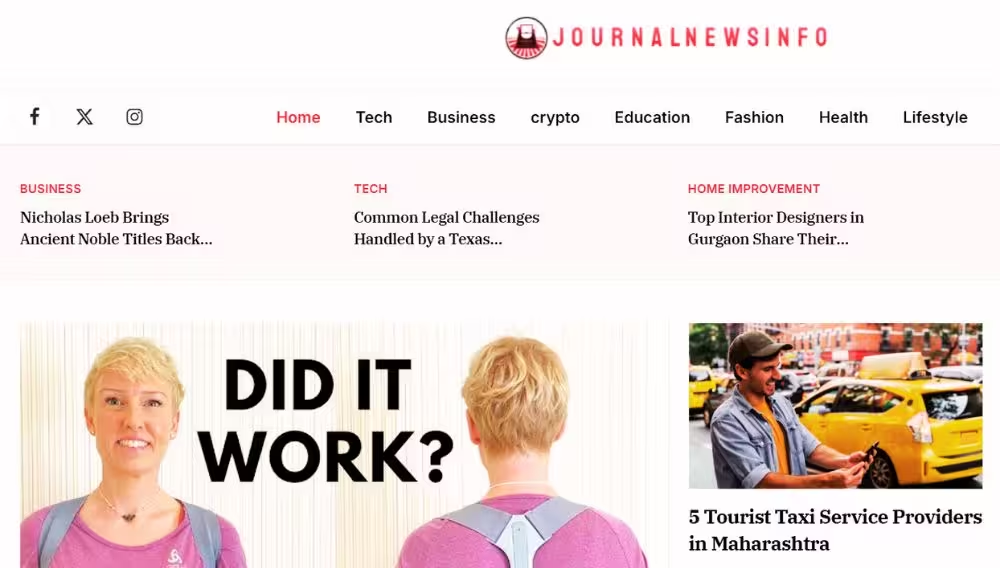
Understanding JournalNewsInfo
From what can be observed, JournalNewsInfo presents itself as a news and information content platform. The name suggests a focus on news coverage, journal-style reporting, or informational content across various topics—essentially positioning itself as a source for current events, stories, and general interest information.
The website appears designed for readers seeking news updates, information articles, or coverage of various topics that might include current events, lifestyle content, technology updates, health information, or other general interest subjects. It’s the kind of platform someone might visit when browsing for news, researching topics, or following up on stories they’ve heard about elsewhere.
People who might search for JournalNewsInfo include casual news readers checking source credibility, individuals who encountered articles from the site and want to verify reliability, fact-checkers researching information sources, or anyone trying to determine whether content from this platform is trustworthy before believing or sharing it.
What Does JournalNewsInfo Actually Provide?
The primary offering appears to be written content covering news and informational topics. This might include articles about current events, trending stories, how-to guides, explainer pieces, opinion content, or general interest stories across multiple categories that typical online readers follow.
From a content perspective, the site likely follows a standard news or blog format with articles organized by category, topic, or publication date. Readers can probably browse through different sections, search for specific subjects, or explore recent posts. The presentation style typically mirrors what you’d find on many content aggregation or news publishing platforms.
The writing style probably aims for accessibility, delivering information in a straightforward manner without requiring specialized knowledge or expertise. Many general news and information sites focus on covering topics broadly to appeal to diverse audiences rather than providing the in-depth analysis you’d find in specialized publications or major established news organizations.
Some content might be original writing created for the platform, while other articles could potentially be aggregated, curated, or republished from various sources. This mixed-content approach is common among general information platforms trying to maintain consistent content flow across multiple topic areas.
Reasons Behind Search Interest
Several factors explain why people specifically search for JournalNewsInfo:
Source credibility verification drives many searches. When someone encounters news or information from an unfamiliar website, responsible readers naturally want to verify whether the source is credible before believing the content or sharing it with others.
Misinformation concerns prompt investigation. With widespread awareness of fake news, clickbait, and unreliable information online, cautious readers check sources before accepting stories as factual, especially for controversial or surprising claims.
Limited brand recognition creates questions. Unlike established news outlets like Reuters, Associated Press, BBC, or major newspapers that people immediately recognize, lesser-known sites don’t carry instant credibility, prompting further investigation.
Fact-checking motivation leads people to research websites. Before sharing articles on social media or citing information in discussions, responsible individuals want to understand the source’s reliability and potential bias.
Unexpected discovery might occur when someone lands on the site through search results or social media links and wants to understand what publication they’re reading before engaging further with the content or taking any information seriously.
Trust & Transparency Overview
One significant challenge with news and information platforms like JournalNewsInfo is assessing their credibility and journalistic standards. Many readers can’t immediately identify who operates the site, what editorial processes govern content publication, whether writers have journalistic credentials, how facts are verified, or what the publication’s track record looks like.
The site appears to be relatively new or without extensive public information about its operations, which explains why there might not be detailed “About Us” pages with editorial team information, published ethics policies, ownership transparency, funding sources, correction procedures, or the accountability mechanisms that established news organizations typically maintain.
For casual browsing and entertainment reading, this level of transparency might be acceptable. However, when you’re trying to understand important issues, form opinions on significant matters, verify facts, or make decisions based on news information, the lack of verified journalistic standards and accountability becomes a serious concern.
Understanding these limitations is crucial for appropriate engagement. Consider content as one perspective among many rather than verified reporting, and always cross-reference important news and information through established, reputable sources with proven track records.
Is It Safe to Use JournalNewsInfo?
For basic content consumption and casual browsing, visiting JournalNewsInfo to read articles appears relatively safe in terms of website security. Simply reading content and clicking through articles carries minimal technical risk, assuming your device has standard security protections.
However, maintaining strong critical thinking and appropriate caution is essential:
Never trust news without verification. Any important news—especially breaking stories, controversial claims, health information, or surprising facts—should be verified through multiple established, reputable news sources before accepting as accurate or sharing with others.
Be extremely skeptical of sensational headlines. Many content sites use attention-grabbing headlines that exaggerate, misrepresent, or distort actual story content. Read full articles critically and consider whether headlines accurately reflect the information presented.
Watch for potential bias or undisclosed agendas. Without clear information about ownership, funding sources, or editorial perspective, it’s difficult to assess whether content might be slanted toward particular viewpoints or influenced by undisclosed commercial or political interests.
Avoid basing important decisions on single sources. Whether it’s health advice, financial information, political coverage, legal matters, or other consequential topics, never rely solely on content from websites without established journalistic credentials and accountability.
Be cautious with personal information. If the site requests personal details beyond basic email subscriptions, payment information, or account creation with sensitive data, consider whether that’s necessary and appropriate for an information website.
Cross-reference all factual claims. If articles make specific factual assertions—statistics, quotes, scientific claims, historical facts—verify through original sources, established fact-checking organizations, or reputable news outlets before accepting as accurate.
Check original sources when cited. If articles reference other publications, studies, or sources, verify that those original sources actually exist and are being represented accurately rather than misquoted or taken out of context.
Be aware of clickbait tactics. Sites that rely heavily on sensational headlines, emotional manipulation, or misleading teasers to generate clicks often prioritize traffic over accuracy and quality.
Advantages
JournalNewsInfo offers several potential benefits for appropriate use:
Free access to news and information content allows anyone to browse without subscription fees or paywalls, making content accessible regardless of budget constraints.
Broad topic coverage means you can explore various subjects in one location rather than visiting multiple specialized publications for different types of information.
Accessible writing style likely makes content easy to understand without requiring specialized knowledge or background in particular subjects.
Regular content updates probably keep fresh material flowing, giving returning visitors new articles to explore rather than stale, outdated information.
Convenient browsing through organized categories or search functions allows readers to quickly find topics that interest them or follow specific subjects.
Drawbacks
Several significant limitations deserve serious consideration:
Unverified journalistic standards represent the primary concern. Without clear information about editorial processes, fact-checking procedures, journalist credentials, or accountability mechanisms, readers cannot adequately assess whether reporting is accurate, balanced, and reliable.
No established reputation means there isn’t a track record of trustworthy reporting to evaluate. Established news organizations have demonstrated accuracy, corrected mistakes publicly, and built credibility over time; newer or unknown sites haven’t had that opportunity.
Serious misinformation risks exist when consuming news from sources without verified credibility. Inaccurate, misleading, or false information can spread rapidly, and sites without strong editorial oversight might inadvertently or intentionally publish unreliable content.
Unclear sourcing and attribution make it difficult to trace where information originates. Quality journalism clearly attributes information to specific, verifiable sources, allowing readers to evaluate credibility; vague or missing attribution severely undermines trustworthiness.
Potential hidden bias or agenda could influence content if the site has undisclosed political, commercial, or ideological motivations. Without transparency about ownership, funding, and editorial perspective, readers cannot assess potential conflicts of interest.
Limited or no original reporting might mean the site primarily aggregates, rewrites, or republishes content from other sources rather than conducting genuine journalism with original investigation, fact-checking, and reporting.
No accountability mechanisms like published corrections policies, transparent complaint processes, editorial boards, public editors, or professional oversight that established news organizations maintain to ensure accuracy and address mistakes.
Possible commercial manipulation through native advertising, sponsored content, or affiliate relationships that aren’t clearly disclosed, potentially compromising editorial independence and objectivity.
Final Opinion
JournalNewsInfo appears to be a news and information content platform offering articles across various topics. For readers seeking casual browsing, light reading, or entertainment content, it might serve that very limited purpose.
However, it is absolutely critical to understand and respect the fundamental limitations of news sources without established credibility. In today’s information environment, where misinformation spreads rapidly and consequences of believing false information can be serious, relying on unverified sources is genuinely risky.
Never treat JournalNewsInfo as a primary or reliable news source for important information. The content might introduce you to topics or stories, but any significant news—especially breaking stories, controversial claims, health information, political coverage, or facts that might influence your opinions or decisions—must always be verified through multiple established, reputable news organizations.
Approach the site with strong skepticism and active critical thinking. Question everything you read, cross-reference important information, and prioritize news consumption from established organizations with transparent editorial processes, published ethics policies, verified journalists, proven track records of accuracy, and robust accountability mechanisms.
For actual reliable news consumption, prioritize established news organizations like:
- Wire services: Associated Press, Reuters
- International broadcasters: BBC, NPR
- Major newspapers with long histories: The New York Times, The Washington Post, The Wall Street Journal
- Specialized news outlets with proven expertise in their coverage areas
These organizations have demonstrated commitment to journalistic standards through decades of verified reporting, public corrections when mistakes occur, transparent editorial processes, and accountability to professional journalism ethics.
Use JournalNewsInfo, if at all, strictly for casual entertainment reading, never for important information or as a trustworthy news source. The difference between entertainment content and reliable journalism matters profoundly for informed citizenship, personal decision-making, and understanding the world accurately.
Frequently Asked Questions
What is JournalNewsInfo?
JournalNewsInfo is a website that appears to publish news and information content across various topics. It presents itself as a source for news articles and general interest information, though without clear details about its operations, editorial team, or journalistic standards. The site lacks the established reputation, transparent processes, and accountability mechanisms that characterize trustworthy news organizations, making it difficult to assess the reliability and accuracy of its content compared to verified news sources.
Is JournalNewsInfo a credible news source?
Without clear information about editorial processes, journalist credentials, fact-checking procedures, ownership transparency, published ethics policies, or an established track record, it’s impossible to verify JournalNewsInfo as a credible news source. For reliable news consumption, see more telecallcrm readers should prioritize established news organizations with proven journalistic standards, transparent operations, verified journalists, decades of demonstrated accuracy, and robust accountability mechanisms. Any news from unfamiliar sources should always be verified through multiple reputable outlets before accepting as accurate.
Can I trust the information on JournalNewsInfo?
You should approach any content from JournalNewsInfo with significant skepticism and verify all important information through established, reputable news sources before accepting it as factual or sharing it with others. Without verified journalistic standards, accountability mechanisms, or a proven track record, there’s no reliable way to assess whether content is accurate, balanced, properly sourced, or trustworthy. For consequential news—especially breaking stories, health information, political coverage, or controversial claims—always cross-reference through multiple trusted news organizations with established credibility.
How does JournalNewsInfo compare to established news outlets?
Established news outlets like Reuters, Associated Press, BBC, NPR, or major newspapers have transparent editorial processes, verified journalists with professional credentials, published ethics policies, rigorous fact-checking procedures, public correction mechanisms, decades of proven reliability, and accountability to professional journalism standards. They invest heavily in original reporting, employ experienced journalists, maintain editorial independence, and stake their reputations on accuracy. JournalNewsInfo lacks this credibility infrastructure, making it fundamentally different from organizations whose primary mission is verified, accountable journalism serving the public interest.